Intimate Details

FacebookTwitterLinkedInGoogle+Share

Dark Romance

by Nivara Xaykao

Being from Texas, Mexican culture has always been a natural part of my visual vocabulary – one that I did not fully appreciate, much less notice, until I relocated to the urban environs of New York City (where one of the better, cheaper places to get enchiladas is Trader Joe’s). Now, Latin influences in general seem to be all around, notably on the biggest stage of all: the runway.

Naturally, Miuccia Prada kicked things off with her exuberant S/S 2011 collection peppered with banana prints, embroidered monkeys and striped sombreros. In recent seasons for Givenchy, the king of cool Riccardo Tisci has unveiled an edgier side to the inspiration, pairing tropical prints with images of the Virgin Mary and body jewelry with ornate mantilla laces. From the onset, there was something about the extravagant imagery that resonated deep within me, triggering memories of colorful quinceañeras, kitschy folk art shops in Austin and zipping through forgotten Texas towns.

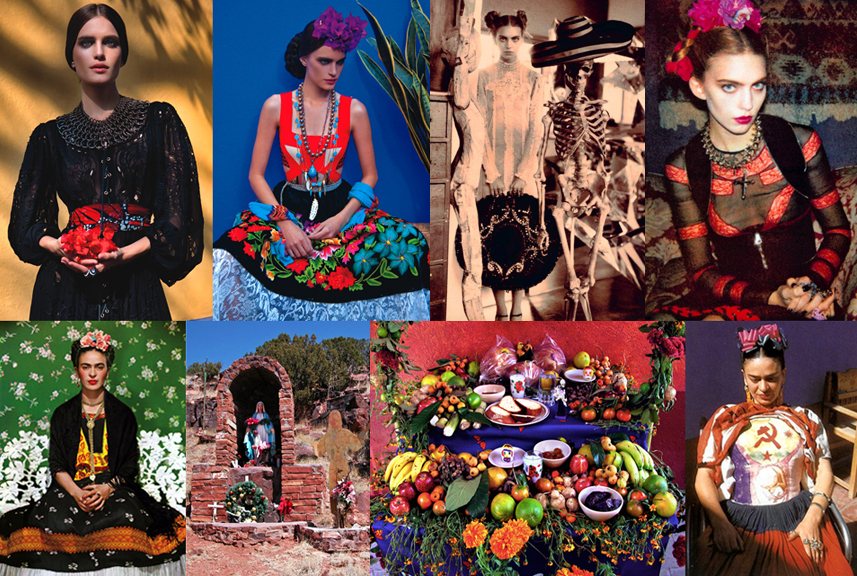
Givenchy, Pre-Fall 2012; Temperley London, Spring 2012; Emilio Pucci, Spring 2012; Pleasure State; Damaris>

In assembling my big Valentine’s Day report for Stylesight, I kept on coming back to this Marie Claire Italia editorial shot by Wendy Bevan. Swishy full skirts, crafty folkloric details, surreal graphics and roses adorning the hair – who else but Frida Kahlo? It was a dark yet all-the-more-compelling side of romance I wanted to explore further. So I began to connect the dots, unearthing several evocative editorials – all done within the past year – until the trail of rose petals led me to recent collections from Alexander McQueen, Zac Posen, Pucci and Jason Wu.

The Spanish design identity is invariably tied to the Catholic tradition, from Cristóbal Balenciaga’s monastic volumes inspired by nun’s habits to Kahlo’s expressive paintings that recall lavish roadside shrines. It is an aesthetic that fully embraces contradictions: The Day of the Dead (Día de los Muertos) – the subject of much fascination lately – is an occasion that both honors the deceased and celebrates life. From the surrealism of artist Salvador Dali to the magical realism of writer Gabriel Garcia Marquez, it is a sensibility grounded in the earth and floating in the clouds.

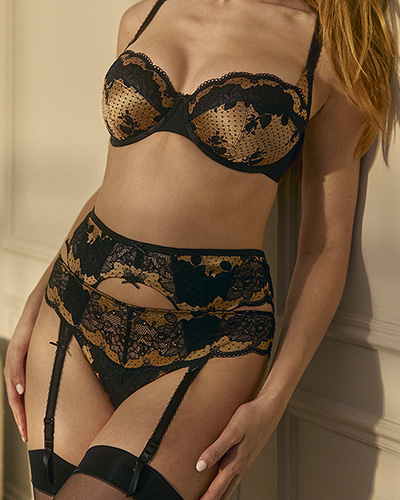
In a world where the sacred exists alongside the profane and the austere with the ornate, what exactly does this mean for intimates? It’s over-the-top ornamentation with a side of humor, demure silhouettes studded with subversive details (a cutout here, a bondage-y strap there), and where the beauty and romance of blossoming flowers can be still be found in an endless field of black.


COMMENTS
0

FacebookTwitterLinkedInGoogle+Share

1920′s Effortless Elegance Returns

by Nivara Xaykao

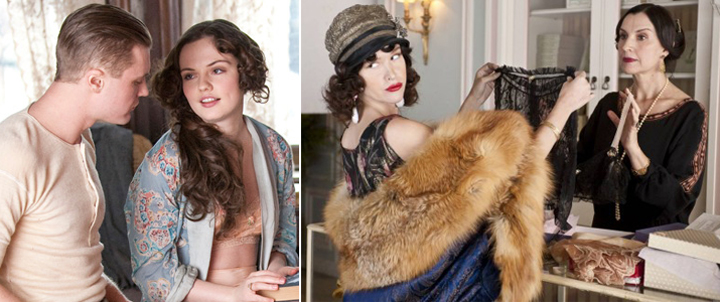
After finally catching a few episodes of Boardwalk Empire at a friend’s house not too long ago, I immediately became hooked and marathon-watched the entire series over the holidays. Aside from its fascinating look into the dark underbelly of 1920s Atlantic City, the extravagant, meticulously detailed costumes provide more than enough reason to tune in.

Although women are meant to be seen and not heard in Boardwalk Empire’s criminal underworld, their wardrobes – from the inside to the outside – do plenty of the talking. In addition to the popular HBO show, Woody Allen’s Midnight in Paris set off a fury of Zelda Fitzgerald bobs and Gertrude Stein-centric art exhibits around the world last year; and early images from Baz Luhrmann’s take on The Great Gatsby have sent fashionistas flocking to vintage outlets for flashy headdresses and beautiful shirts. Even the stuffy English aristocrats at Downton Abbey finally reached the year 1920 at season’s end. No matter where you look, all signs seem to be pointing to The Dollar Decade.

In fashion, Jazz Age looks ran rampant on the S/S 2012 runway, from Marc Jacob’s up-all-night-dancing working class flappers to Etro’s artsy Sonia Delaunay-inspired Bohemians. Over the holidays, retailers from La Perla to Topshop were ringing in the 20s with fringe, fur, sequins and festive in-store displays. Brands like Only Hearts and Anthropologie have built their entire reputation on early 20th century influences, and their vintage-inspired ethos taps right into the 20s zeitgeist. What is it about this era that women find so appealing? And why now?

courtesy of Stylesight

The end of WWI ushered in a decade of relative prosperity, a time when people had a little extra cash to luxuriate and extra time to leisure. In America, 1920 marked the passage of the Nineteenth Amendment, which granted women the right to vote. Reciprocally, women began to shed their corsets for soft, unstructured bralettes and frilly Victorian camisoles for straight, boyish chemises. Tap pants were fluid and roomy, perfect for wearing under your favorite dancing dress or just around the home. Robes ranged from fur-trimmed cocoons to languid kimonos. Colors were soft and sweet, uncomplicated laces adorned hems and delicate bows dotted the décolletage. It was feminine but far from fussy, a period of unparalleled glamour yet newfound ease for women.

More than showy ruffles and binding shapewear, the modern woman can appreciate the relaxed sensibility of the 1920s. But she can also indulge in its sumptuous silks, fluid silhouettes that accentuate natural curves and understated touches of opulence. Most of all, the 1920s promoted an ideal of effortless elegance that every woman still aspires to achieve, whether she’s wearing her finest fur coat or shabbiest sweats.

COMMENTS
1

Nivara Xaykao

Intimate Details


Nivara Xaykao covers intimates, swimwear and hosiery for STYLESIGHT. Prior to joining the company, she studied fashion design at the University of Texas at Austin and worked in design and product development for major lingerie brands. Unabashedly romantic and a fan of stockings, slips and soaking up the sun, this blog gives her a chance to express her love for the finer things in life in intimate detail.

Intimate Details at Stylesight